What we deliver
A structured briefing of automation setup, monitoring summaries, and configuration governance—presented as repeatable modules that can be reviewed consistently.
Swap Inomax Opt stands as a premier information hub showcasing polished automation tooling and intuitive interfaces tailored for financial services teams. The platform emphasizes repeatable workflows, crisp summaries, and governance-forward patterns that illustrate how automation and oversight come together in real-world operations.
Swap Inomax Opt presents professional, objective insights into operational workflows widely used within financial services. The content explains how structured screens, consistent terminology, and governance routines can support day-to-day oversight.
A structured briefing of automation setup, monitoring summaries, and configuration governance—presented as repeatable modules that can be reviewed consistently.
Information is articulated in a factual tone, focusing on operational process design, audit-friendly routines, accessible policy links, and disciplined review steps.
The experience emphasizes controlled fields, consent-first patterns, and consistent policy references to support compliant user journeys.
Our aim is to deliver a crisp, navigable view of how financial teams can orchestrate automation with dependable configuration steps, readable monitoring visuals, and governance practices that prioritize clarity and accountability.
Encourage repeatable screens and consistent naming so reviews stay clear across teams and timeframes.
Present information in consolidated views that support structured checks, follow-ups, and seamless handoffs.
Highlight controlled inputs, audit logs, and policy-first patterns aligned with compliance-focused workflows.
Center on real-world routines: baseline configurations, incremental changes, and routine monitoring summaries.
Swap Inomax Opt stands for clarity, discipline, and responsible presentation of financial services workflows. These principles shape how information is organized and how policy access points are surfaced throughout the site.
We prioritize readable layouts, uniform terminology, and concise summaries so operational information can be reviewed with ease.
We present processes as repeatable steps—setup, review, and ongoing checks—so teams align on procedures and documentation.
We keep policy references easy to locate and emphasize consent-driven patterns that support compliant journeys.
We describe risk controls as guardrails—exposure boundaries and structured reviews—presented in a neutral, informational manner.
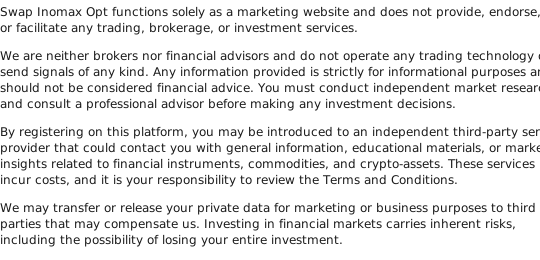
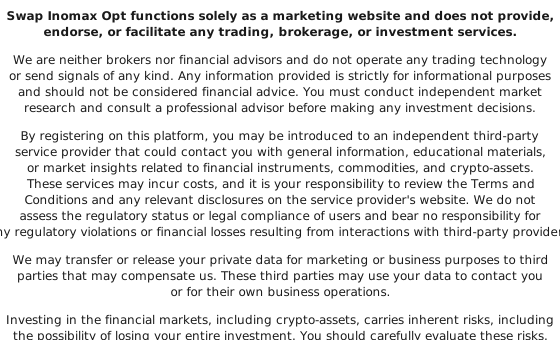
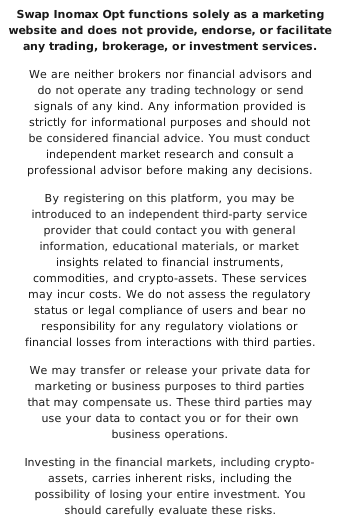
This website functions solely as a marketing platform and does not provide, endorse, or facilitate any trading, brokerage, or investment services.
Read More